
In today’s fast-paced digital world, the terms marketing and advertising are often used interchangeably. But the truth is—they are not the same. They may go hand-in-hand, but each plays a distinct role in how businesses connect with customers and drive growth.
Whether you’re a budding entrepreneur, a student preparing for competitive exams, or a digital marketer building your portfolio, understanding the difference between marketing and advertising is essential for effective communication and strategy development.
Let’s break it down—clearly, practically, and with real-world relevance.
What Is Marketing?
Marketing is the broad, strategic process that encompasses everything a business does to promote its products or services. From understanding customer needs, crafting the right message, setting the right price, and choosing the perfect place to distribute—marketing is the foundation of business growth.
It begins with research and ends with results. It includes branding, content, customer service, social media, SEO, and yes—advertising too.
You can think of marketing as the big picture. It’s the game plan, and advertising is one of its most high-impact tools.
What Is Advertising?
Advertising is just one part of marketing. It’s the act of paying to promote your brand, product, or message. From traditional TV ads to YouTube campaigns, from newspaper classifieds to sponsored Instagram stories—advertising is the loudspeaker that amplifies your message.
But it’s important to understand: advertising is a tactic, not a strategy. It’s often short-term, focused on conversions, and highly targeted.
The Difference Between Marketing and Advertising
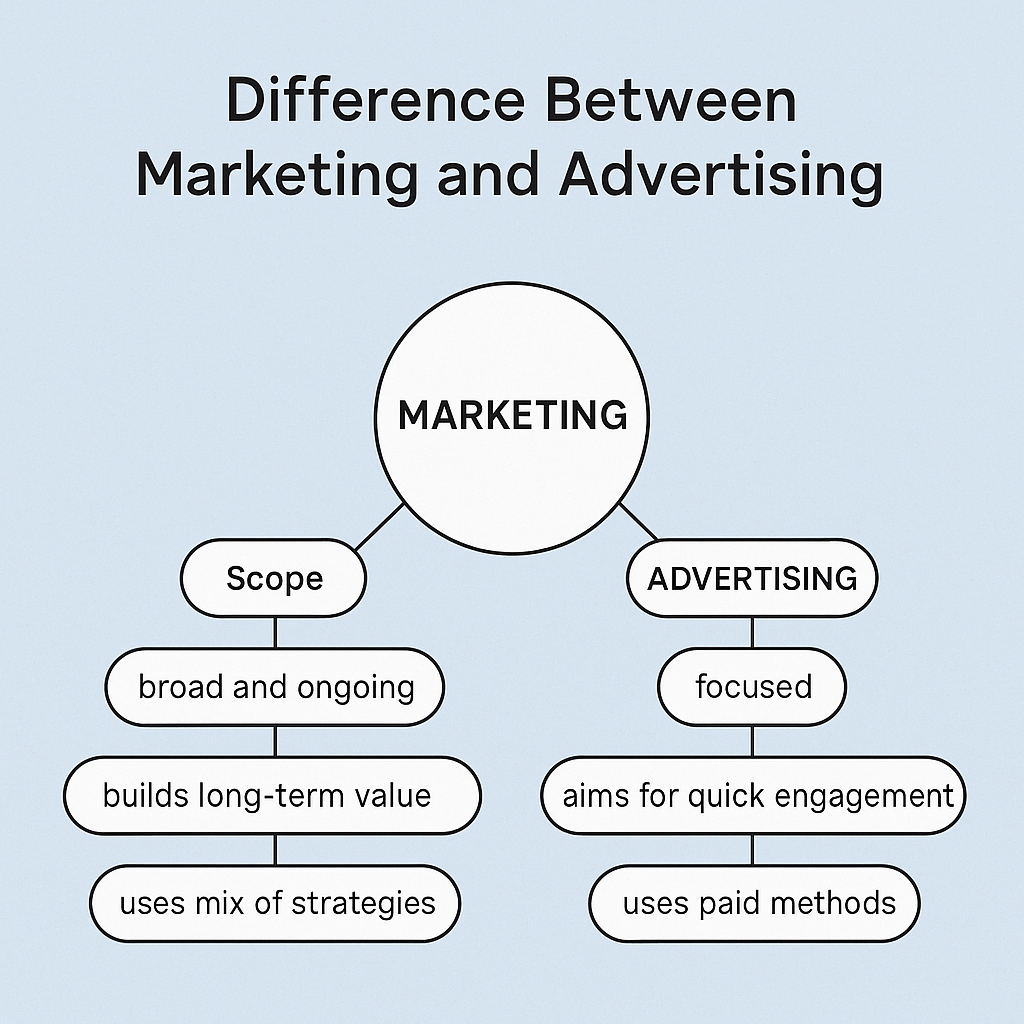
Let’s get into the heart of the discussion—the real difference between marketing and advertising lies in their scope, purpose, and approach.
1. Scope
Marketing is broad and ongoing. It includes customer research, product development, pricing, promotion, distribution, and relationship building.
Advertising is focused. It’s about pushing a message through a channel—often for a limited time.
2. Purpose
Marketing builds long-term brand trust, positioning, and value.
Advertising aims for visibility, quick engagement, and conversions.
3. Approach
Marketing uses a mix of content, SEO, branding, community, email marketing, etc.
Advertising uses paid methods like PPC, sponsored posts, and TV/radio spots.
Understanding the difference between marketing and advertising is crucial because it helps you prioritize what to invest in—and when.
HubSpot’s Guide to Marketing vs. Advertising
Real-Life Example
Let’s say you’re launching a handmade soap brand. Your marketing strategy may include:
Creating an Instagram page with educational posts
Building an eCommerce website
Sending out newsletters
Running a giveaway campaign
Your advertising plan within that may include:
Running a Facebook Ad with “Buy 1 Get 1 Free” offer
Placing a banner ad on a skincare blog
Paying an influencer to create a reel
See the difference? Marketing is the ecosystem. Advertising is one strong current in that ecosystem.
Why This Matters in 2025 and Beyond
The digital economy is growing rapidly, and understanding the difference between marketing and advertising helps you future-proof your strategy. Businesses that invest in holistic marketing tend to build loyal audiences, while those who rely only on advertising risk losing visibility once the money stops.
Especially for students and professionals entering the world of digital marketing, recognizing this difference allows you to think like a strategist, not just a service provider.
Suggested : Read Top Digital Marketing Services to Offer as a Freelancer in 2025
…..
To sum up: advertising is a slice of the pie, while marketing is the whole kitchen. Both are essential, but knowing when to use which—and how to integrate them—is what separates good campaigns from great ones.
The difference between marketing and advertising isn’t just a textbook topic; it’s a mindset that can shape how you grow a brand or scale your freelance career.