
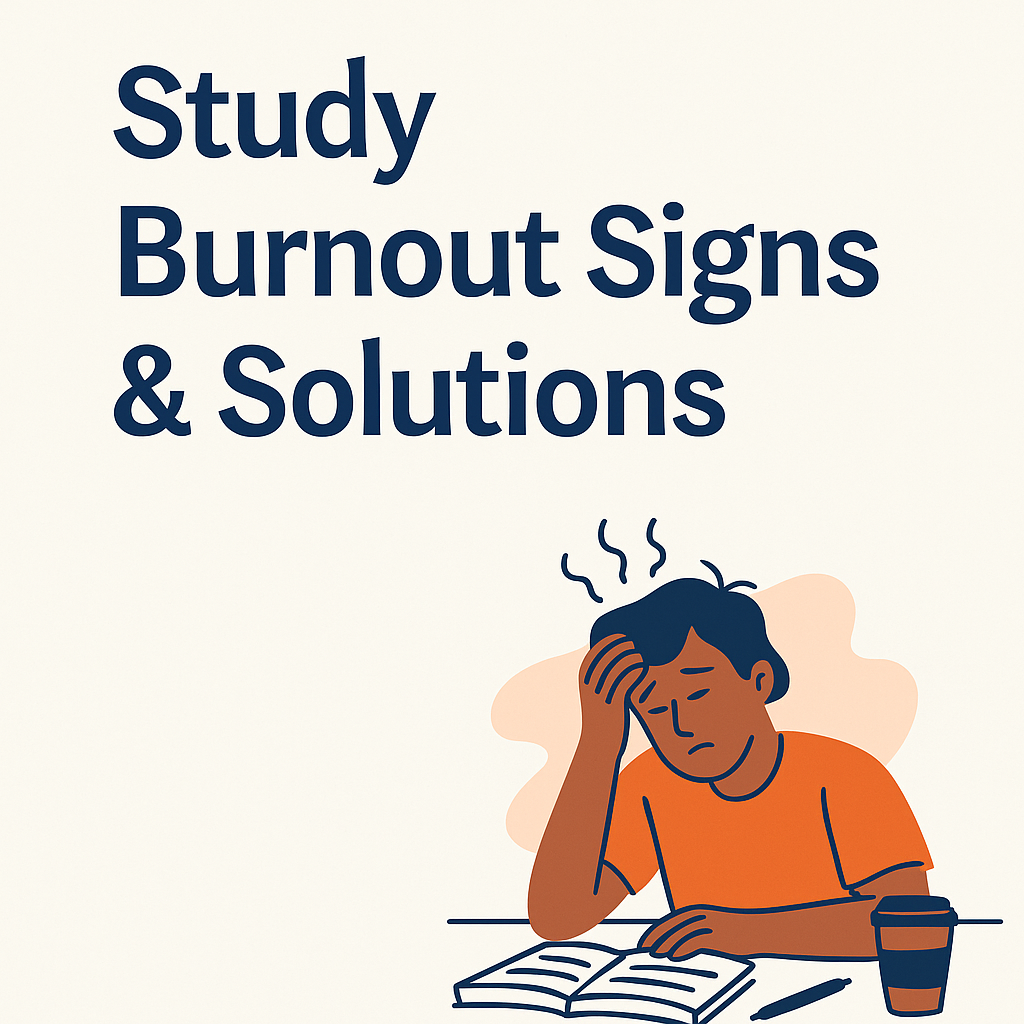
At some point during academic life, every student has faced exhaustion that’s more than just being “tired.” It’s the feeling of being mentally drained, emotionally detached, and physically worn out from constant studying. That, in essence, is study burnout. In this blog, I want to walk you through the study burnout signs & solutions that I’ve come to understand—not just from books, but from experience.
Burnout isn’t a badge of hard work. It’s a warning signal. And the earlier we learn to spot it, the sooner we can deal with it—gracefully and effectively.
What Is Study Burnout?
Study burnout is a prolonged state of academic fatigue, often caused by unrelenting stress, pressure to perform, and a lack of balance. Unlike short-term stress, study burnout doesn’t go away after a good night’s sleep. It builds slowly and affects your motivation, focus, and even your physical health.
Recognizing study burnout signs & solutions early on can help prevent long-term consequences. It’s important for students preparing for competitive exams like CAT, CSEET, or college semester finals to know when they’re pushing too far.
Common Study Burnout Signs
Understanding what burnout looks like is the first step. Below are the most common study burnout signs & solutions every student should be aware of.
1. Constant Fatigue
You wake up tired, and no matter how much you rest, you still feel drained. This isn’t laziness—it’s burnout.
2. Lack of Motivation
You once loved your subjects or at least tolerated them. But now? Even opening your notes feels like a task.
3. Poor Concentration
Reading the same paragraph five times and still not remembering it? That’s a red flag. Study burnout affects cognitive clarity.
4. Physical Symptoms
Headaches, eye strain, digestive issues, or even mild chest discomfort can arise from prolonged stress.
5. Emotional Detachment
You start feeling emotionally numb. Even small wins—like finishing a chapter—don’t feel like achievements anymore.
6. Procrastination with Guilt
You avoid tasks because they overwhelm you, then feel guilty about it. This cycle fuels burnout further.
These study burnout signs & solutions aren’t just theory—they’re reality for thousands of students. Recognizing them early can change how you respond before it turns into full collapse.
Study Burnout Solutions That Actually Work
Fortunately, burnout isn’t permanent. If you know the right solutions and apply them regularly, you can recover—even rebuild stronger.
1. Take Strategic Breaks
Studying non-stop isn’t a badge of honor. Short, focused sessions with intentional breaks (like the Pomodoro technique) can improve efficiency and help reduce burnout.
2. Re-evaluate Your Schedule
If your timetable feels like a punishment, it’s time to reassess. Make space for hobbies, movement, and enough sleep.
Learn about effective planning techniques from Todoist’s blog on productivity
3. Focus on Nutrition and Sleep
No brain can function on junk food and four hours of sleep. Fuel yourself with proper food and rest. Burnout thrives when your body is out of sync.
4. Talk to Someone
Sometimes just talking to a friend, mentor, or counselor can break the cycle. Don’t carry the pressure alone. Opening up is a part of the study burnout signs & solutions we don’t talk enough about.
Visit YourDOST – Mental Health for Students for professional support and peer discussion.
5. Set Realistic Expectations
Perfectionism often leads straight into burnout. Aim for progress, not perfection. The study burnout signs & solutions mindset is not about doing less—but doing what matters in a sustainable way.
6. Keep a Burnout Journal
Track when you feel most tired, anxious, or disengaged. You’ll start to see patterns—and once you do, you can make changes with intention.
My Personal Experience With Burnout
During the early weeks of my CAT preparation, I was excited and motivated. But as the syllabus grew and mock tests became more intense, I stopped feeling like myself. I didn’t recognize it as burnout at first—I thought I was just being “lazy” or “inconsistent.” Looking back, I now realize I was displaying almost all the major study burnout signs & solutions I’ve listed above.
Recovery wasn’t instant. It took real effort to get back into rhythm without breaking down. But once I learned to recognize the signs and apply actual strategies (instead of just pushing harder), I saw the change.
How You Can Stay Burnout-Free While Studying
Here are small but powerful habits that can help prevent burnout before it begins:
Reflect on your energy levels weekly
Make room for hobbies, even if just 30 minutes a day
Avoid toxic comparison—your journey is your own
Follow a sustainable plan rather than a punishing one
Reward yourself for consistency, not perfection
These little tweaks, when practiced consistently, become your personal study burnout signs & solutions checklist.
………
Burnout doesn’t make you weak—it makes you human. Preparing for exams, managing college, and building a future can feel overwhelming at times. But understanding study burnout signs & solutions gives you the power to pause, reflect, and course-correct.
If you’re reading this and see a version of yourself in it, take that as your cue to breathe, step back, and take care of your mind. Studying is important, but not at the cost of yourself.
Stay consistent. Stay kind to yourself. The results will follow.
Suggested : Read From Average to Achiever: How a Solid Daily Routine Transforms Students